
Fluorescence
Emission of light from a substance after absorbing radiation.

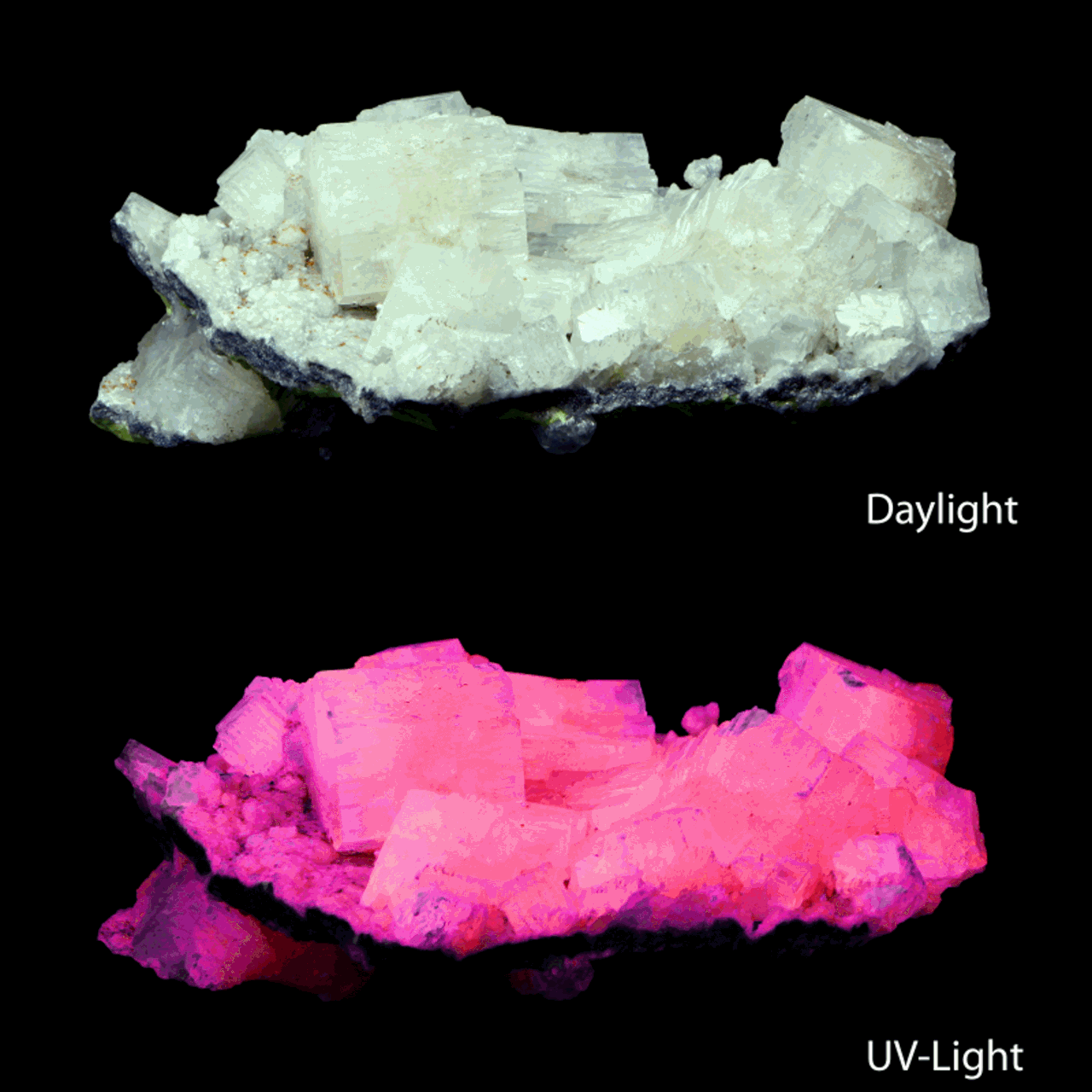
Fluorescence is a type of photoluminescence in which a substance absorbs light or other electromagnetic radiation and then emits light. It is distinguished from phosphorescence by the nearly immediate cessation of glow when the radiation source stops. Fluorescence has many practical applications, including in fluorescent lamps, mineralogy, gemology, medicine, and biological detectors, and occurs frequently in nature as biofluorescence.
- field
- Physics, Chemistry
- known_for
- Emission of light by a substance after absorbing electromagnetic radiation, with immediate cessation upon removal of the source
- etymology
- From fluor-spar (fluorite), analogous to opalescence
Lore & Background
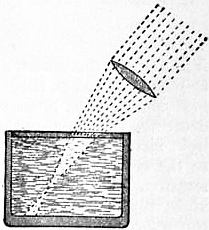
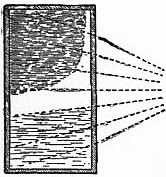
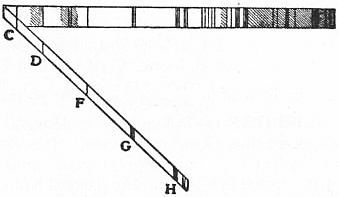
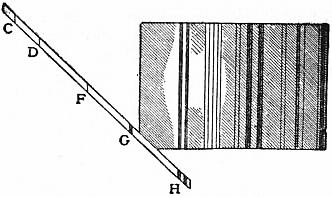
Fluorescence was observed long before it was named. The chemical compound responsible is matlaline. Becquerel observed that calcium sulfide emits light after exposure to solar ultraviolet, stating the emitted light is of longer wavelength, though his observation is now called phosphorescence. Neither Becquerel nor Stokes understood the critical difference from incandescence; in the late 1800s, Gustav Wiedemann proposed the term luminescence to distinguish it. Advances in spectroscopy and quantum electronics between the 1950s and 1970s provided a way to distinguish fluorescence from phosphorescence based on decay times, with fluorescence typically occurring in the nanosecond range.
Reader's Guide
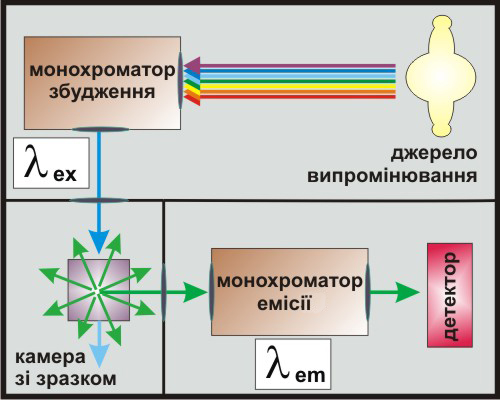
Fluorescence is significant because it underlies a wide range of practical technologies and natural phenomena. Its most common everyday application is in gas-discharge fluorescent lamps and LED lamps, where fluorescent coatings convert UV or blue light into longer wavelengths, producing white light. It is also used in mineralogy, gemology, medicine, chemical sensors, fluorescent labelling, dyes, biological detectors, cosmic-ray detection, vacuum fluorescent displays, and cathode-ray tubes. In nature, fluorescence appears in minerals and many biological forms across all kingdoms of life, often called biofluorescence. The physical principle involves absorption of a photon, exciting a molecule to a higher energy level, followed by emission of light as it returns to a lower energy state. The emitted light typically has a longer wavelength and lower photon energy than the absorbed radiation. The distinction from phosphorescence is based on quantum spin effects: fluorescence occurs when the initial and final states have the same electronic spin multiplicity (singlet states), while phosphorescence involves a change in multiplicity (triplet state). This difference results in fluorescence ceasing nearly immediately after the radiation source stops, whereas phosphorescent materials continue to emit light for some time.
Did You Know?
- The chemical compound responsible for the fluorescence in lignum nephriticum is matlaline, an oxidation product of a flavonoid.
- Fluorescence typically occurs in the nanosecond (billionth of a second) range, distinguishing it from phosphorescence.
Gallery
More in Optics And Color 1-15
Spotted an error? Know more?
This is a living reference — every entry is fact-audited, and reader corrections feed straight into our audit queue. Suggest an edit · See this site's audit record