
Refraction
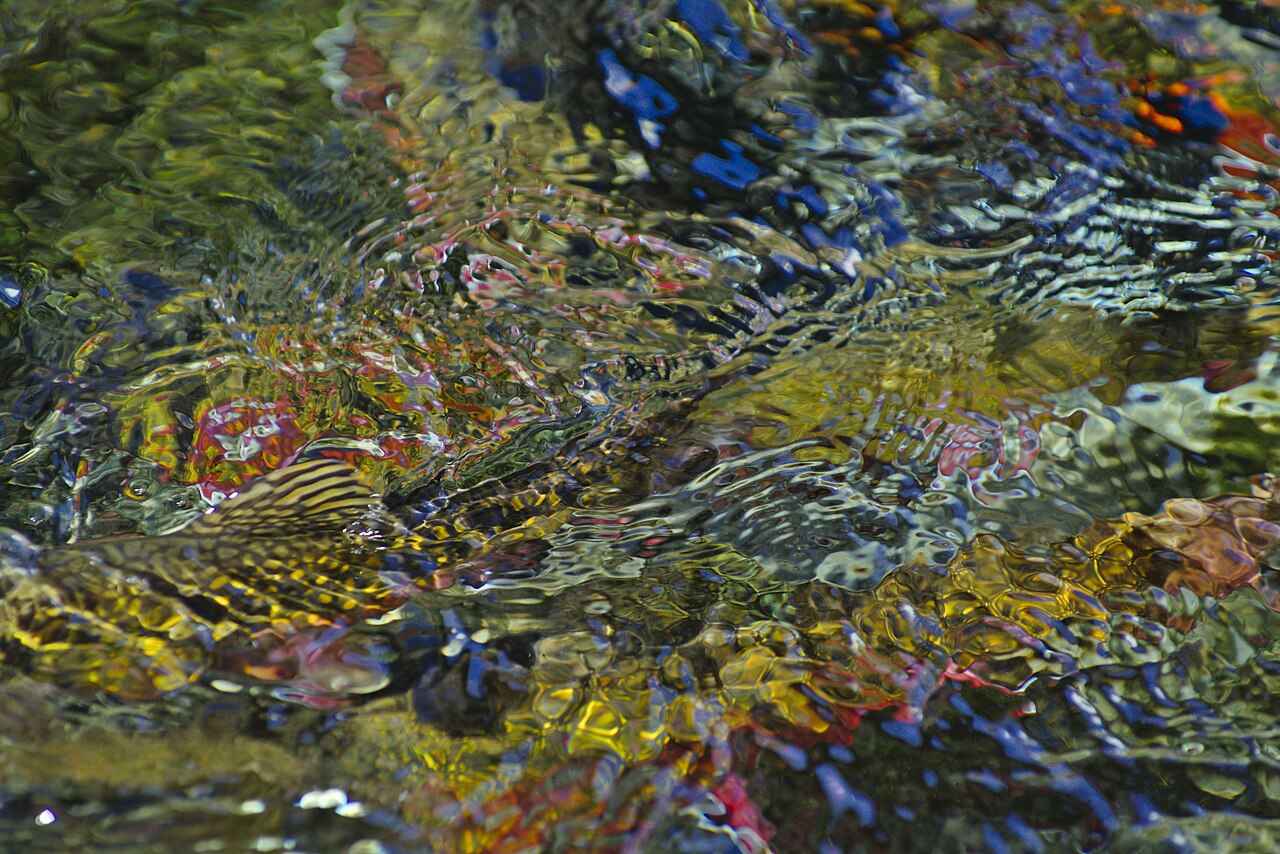
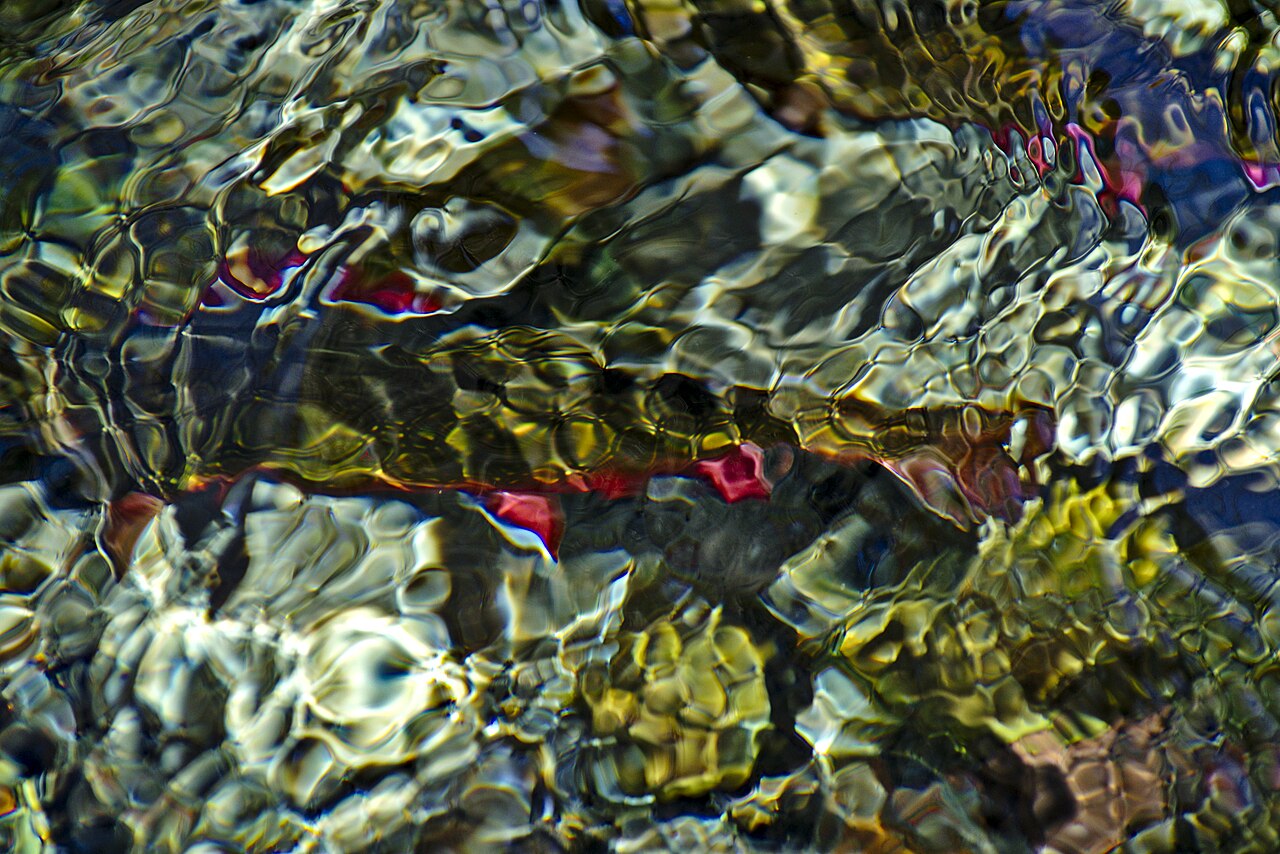
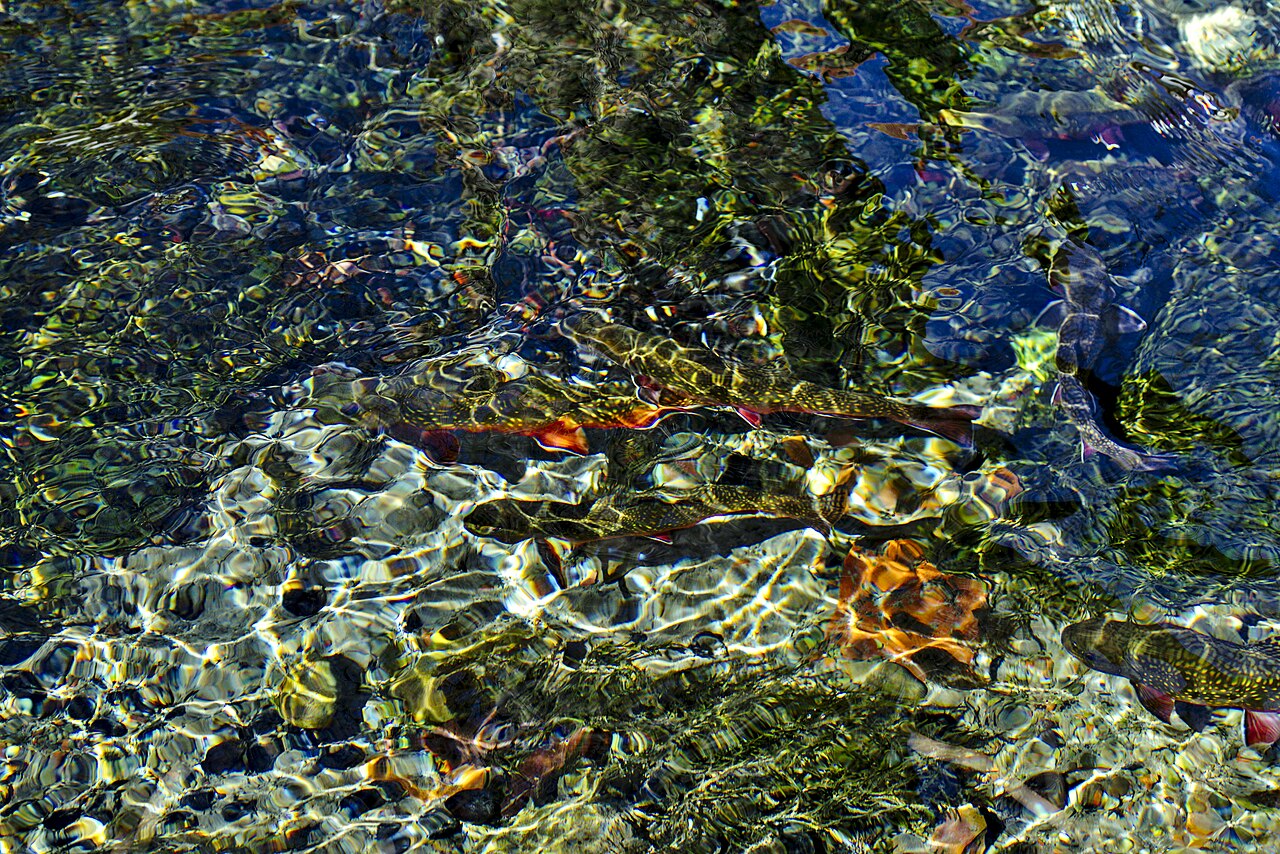
Refraction redirects waves when they change speed between media.

E. Sipinen · CC BY-SA 4.0
Refraction is the redirection of a wave as it passes from one medium to another, caused by a change in the wave's speed or a change in the medium. It is most commonly observed with light, but also occurs with sound waves and water waves. Refraction is fundamental to the operation of optical prisms, lenses, and the human eye, and it explains phenomena such as rainbows and the splitting of white light into spectral colors.
- field
- Physics
- known_for
- Redirection of waves due to change in speed between media; Snell's law; dispersion of light
Lore & Background
Refraction involves two related parts: a reduced speed in an optical medium and a change in angle when a wave front crosses between different media at an angle. Light slows as it travels through a medium other than vacuum because it causes electrons in the material to oscillate, emitting their own electromagnetic waves that interact with the original light, resulting in a combined wave with lower speed. When light returns to a vacuum, this slowing effect ends and its speed returns to c. When light enters a slower medium at an angle, one side of the wavefront is slowed before the other, causing the light to change its angle of travel. Once within the new medium with constant properties, it travels in a straight line again. The bending of light follows Snell's law, which states that for a given pair of media, the ratio of the sines of the angle of incidence and angle of refraction equals the ratio of phase velocities or refractive indices of the two media. Dispersion occurs because the refractive index of materials varies with the wavelength of light, causing different colored components of white light to be refracted at different angles. This allows prisms and raindrops to divide white light into its constituent spectral colors. A wave traveling perpendicular to a boundary will not change direction even if the speed of the wave changes.
Reader's Guide
Refraction is a cornerstone of optics and wave physics, with profound significance for both natural phenomena and technology. It explains why a straw appears bent in water, how lenses focus light in cameras and the human eye, and why rainbows form when sunlight passes through raindrops. Snell's law provides a precise mathematical relationship governing refraction, enabling the design of optical instruments such as microscopes, telescopes, and eyeglasses. The concept of dispersion, arising from wavelength-dependent refractive indices, is essential for understanding how prisms separate white light into a spectrum and for technologies like spectroscopy. Refraction also applies to other waves, including sound and water waves, making it a universal principle in wave mechanics. Its legacy endures in modern physics, where it continues to inform research in materials science, telecommunications, and photonics.
Did You Know?
- Refraction can be caused by a wave's change in speed or by a change in the medium.
- The refractive index of materials varies with the wavelength of light, causing dispersion.
- When light enters a slower medium at an angle, one side of the wavefront is slowed before the other, bending the wave.
- A wave traveling perpendicular to a boundary will not change direction even if the speed of the wave changes.
The Physics Behind the Sky's Palette
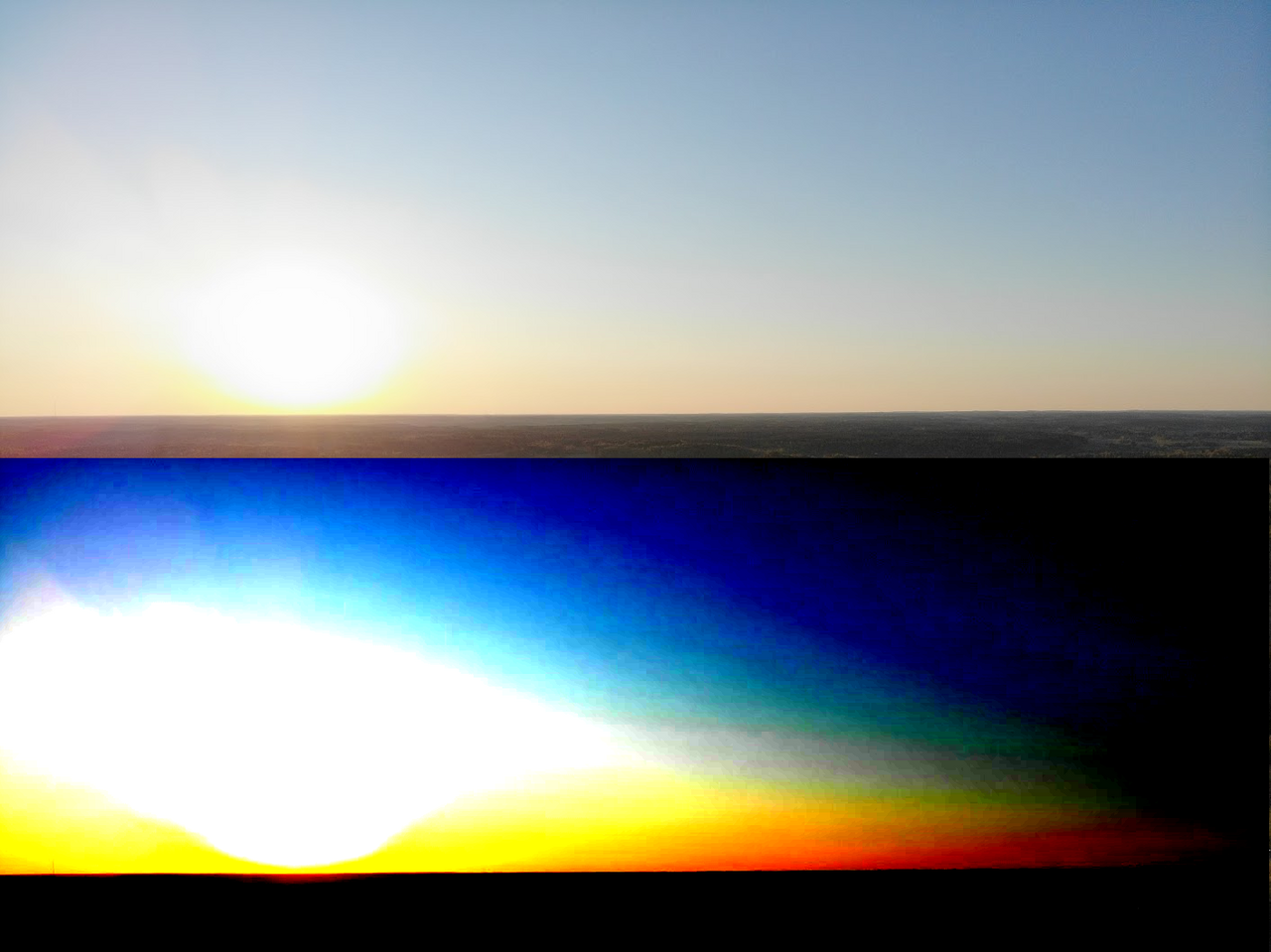
The blue we see overhead is not a single uniform shade but a gradient shaped by geometry. Light arriving from the zenith travels the shortest possible path through the atmosphere—roughly one thirty-eighth of the path a ray takes when it grazes the horizon—so it undergoes less Rayleigh scattering and appears deeper blue. Near the horizon, the longer journey through air means more scattering, brightening the hue. Yet the story grows stranger at extreme distances. Red light, though scattered less than blue, can scatter at a point far from the observer and still reach the eye, while blue light scattered at that same distance is more likely to be lost. The net effect is that light from infinitely distant sources tends toward white, which is why far-off clouds or snow-capped peaks can take on a yellowish tint, especially when overcast skies dim the blue contribution. At the molecular scale, scattering in air favors the forward and backward directions over lateral ones, and individual water droplets hit by white light produce concentric colored rings. When a cloud is thick enough, overlapping scattering from countless droplets blends those rings into a flat, washed-out white.
Mirages and the Bending of Light
Among the most dramatic demonstrations of atmospheric refraction are the mirages that arise when temperature gradients bend light rays away from their straight-line paths. A warm surface heats the air just above it, creating a vertical gradient in the refractive index; light traveling through these layers of differing density curves, and the result is a displaced or heavily distorted image of a distant object. One well-known variant, the Novaya Zemlya effect, warps the Sun's apparent shape and can make it rise earlier or set later than astronomical calculations predict. The most spectacular form, the Fata Morgana, occurs under a temperature inversion and stretches objects on or even beyond the horizon—ships, icebergs, cliffs, distant islands—into elongated, elevated silhouettes that resemble fairy-tale castles. These phenomena sit alongside a broader family of optical effects produced by ice crystals and other suspended particles: halos, coronas, sun dogs, afterglows, and polar stratospheric clouds, each depending on the specific size and geometry of the scattering medium. Together they remind us that what we see in the sky is never a simple photograph of reality but a construction shaped by the invisible architecture of the air between us and the light source.
The Moon Illusion: A Century of Debate
Long before modern vision science, the question of why the Moon appears larger near the horizon than overhead was already a subject of serious inquiry. He argued that vision is processed in the brain and shaped by personal experience, making it inherently subjective. His key insight was that size judgment depends on distance judgment, and distance judgment in turn depends on whether the observer can trace an unbroken chain of intervening objects between themselves and the target. Overhead, the Moon has no such chain and therefore reads as far and small; at the horizon, the full landscape between observer and sky provides that chain, making the Moon read as far and large. Through the work of Roger Bacon, John Pecham, and Witelo, this psychological reading gradually displaced Ptolemy's model, which was formally rejected by the seventeenth century. Yet the puzzle refused to die.
From Ancient Texts to Modern Textbooks
The intellectual history of meteorological optics spans centuries. The phenomena catalogued in this field are remarkably diverse: the blue gradient of a clear sky, the red glow of a low Sun, the colored rings of a corona, the prismatic arc of a rainbow produced by internal reflection and dispersive refraction within raindrops, the shimmering crepuscular and anticrepuscular rays, and the apparent size distortion of the Sun and Moon. A useful distinction, though often blurred in casual usage, separates atmospheric optics—the broader study of optical characteristics at resolutions beyond naked-eye perception—from meteorological optics, which focuses specifically on patterns visible without instruments. Rainbows, for instance, are most conspicuous when the Sun sits low, because the arc then appears high in the sky; with the Sun overhead, any rainbow would form near the observer's feet, sparse and nearly invisible.
Gallery
More in Optics And Color 1-15
Spotted an error? Know more?
This is a living reference — every entry is fact-audited, and reader corrections feed straight into our audit queue. Suggest an edit · See this site's audit record